Repeat of Compression Relief Failure Causing Choke-Sputter-Die, or Both?

Forest#2

Well-Known Member
Joined
Apr 17, 2022
Threads
1
Messages
643
Appears to be maybe at least two issues.

For ONE
We already know you are probably not getting a compression release IF the electrical/mechanical cranking system is ok.

Did you SEE the compression release bump as you slowly rotated the engine after you adjusted the INTAKE valve lash?
You can review on-line how to look for such.
 

Sears L2000

Member
Joined
Nov 13, 2025
Threads
2
Messages
12
My un mechanical wife went shopping and came home with a photo of the solution. All I had to do was go to the store she went to, match the picture to a new mower, and pay for it.🙀

1765226976768.jpeg

I will look inside the muffler.
 

Forest#2

Well-Known Member
Joined
Apr 17, 2022
Threads
1
Messages
643
A xmas gift to her.
 

Sears L2000

Member
Joined
Nov 13, 2025
Threads
2
Messages
12
That engine is attached to a SCAG Patriot. A long term solution, if needed.

The Sears B&S here is a challenge. When adjusting the valves, I found the top dead center where both valves are loose slightly. Set the gaps and tightened them. Good so far. Resealed.

I cannot say I looked for or noticed the compression relief bump. I was just looking for the loose TDC. Not the tight one.

I continue to marvel that my 1999 Craftsman Kohler 15.5hp continues to run just fine while the Craftsman 20hp is in the junk yard and the 2013 19hp seems on its way. (This does not count having to weld the 1999 frame sheet metal tears several times and weld & bolt the deck back on to the deck lifter plates.)
 

Forest#2

Well-Known Member
Joined
Apr 17, 2022
Threads
1
Messages
643
You say:
I cannot say
I looked for or noticed the compression relief bump. I was just looking for the loose TDC. Not the tight one.

The valves are suppose to be adjusted at !/4 inch ATDC per the service manual.
You have to slowly rotate the engine in the run direction and carefully watch the intake push rod and rocker arm for the momentary intake valve lift just before the piston reaches TDC. The rocker arm should raise just little bit just before TDC (valve momentarily opens to dump some compression) and then re-close at TDC. After adjusting you can slowly rotate the engine in the run direction and feel manually for compression release. Remove the air cowling and use a breakover on the flywheel nut. (or leave the spark plug wire off and crank before re-installing the valve cover. (saves lots of time fooling around trying to diagnose valve/cam issues)

I've felt your pain with those Briggs single OHV's. Briggs should be ashamed of themselves.
I prefer replacing the single OHV's with the older L-head or the old L-head opposed twin engines. I've also replaced them with Kohler engines. Just have to do some minor wiring changes when using the Kohlers. If the PTO is electric the engine will need a 8 amp and up charging system.
 

slomo

Lawn Pro
Joined
Jul 14, 2019
Threads
81
Messages
5,911
I continue to marvel that my 1999 Craftsman Kohler 15.5hp continues to run just fine while the Craftsman 20hp is in the junk yard and the 2013 19hp seems on its way. (This does not count having to weld the 1999 frame sheet metal tears several times and weld & bolt the deck back on to the deck lifter plates.)
Lack of maintenance ma-ma', lack of maintenance.
 

Wrenchit

Member
Joined
Nov 21, 2017
Threads
0
Messages
27
You say:
I cannot say
I looked for or noticed the compression relief bump. I was just looking for the loose TDC. Not the tight one.

The valves are suppose to be adjusted at !/4 inch ATDC per the service manual.
You have to slowly rotate the engine in the run direction and carefully watch the intake push rod and rocker arm for the momentary intake valve lift just before the piston reaches TDC. The rocker arm should raise just little bit just before TDC (valve momentarily opens to dump some compression) and then re-close at TDC. After adjusting you can slowly rotate the engine in the run direction and feel manually for compression release. Remove the air cowling and use a breakover on the flywheel nut. (or leave the spark plug wire off and crank before re-installing the valve cover. (saves lots of time fooling around trying to diagnose valve/cam issues)

I've felt your pain with those Briggs single OHV's. Briggs should be ashamed of themselves.
I prefer replacing the single OHV's with the older L-head or the old L-head opposed twin engines. I've also replaced them with Kohler engines. Just have to do some minor wiring changes when using the Kohlers. If the PTO is electric the engine will need a 8 amp and up charging system.
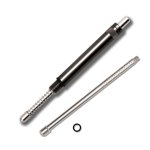
Older thread, but if you do a lot of valve adjustments as I do, this little guy is great!
RAMATA Upgrade Top Dead Center Indicator on Amazon, around 12 bucks.
You can an axect 1/4" after with no guesswork.
I used chopsticks for years before I bought this thing.
top dead center finder.jpgLOL
 

slomo

Lawn Pro
Joined
Jul 14, 2019
Threads
81
Messages
5,911
Older thread, but if you do a lot of valve adjustments as I do, this little guy is great!
RAMATA Upgrade Top Dead Center Indicator on Amazon, around 12 bucks.
You can an axect 1/4" after with no guesswork.
I used chopsticks for years before I bought this thing.
View attachment 72448LOL
Nice tool but not really needed. Turn engine where both valves are closed. Set gap to factory specs.

Used a non-hardening sealant on the valve cover. The next guy will kiss you on the mouth for this step.

1765315396576.png
 

Sears L2000

Member
Joined
Nov 13, 2025
Threads
2
Messages
12
No mud daubers nests or other debris in the muffler system visible.
 

Wrenchit

Member
Joined
Nov 21, 2017
Threads
0
Messages
27
Nice tool but not really needed. Turn engine where both valves are closed. Set gap to factory specs.

Used a non-hardening sealant on the valve cover. The next guy will kiss you on the mouth for this step.

View attachment 72449
When you hit 70 and your eyes start to go south, any tool that helps is worth it. My dad had me grinding vales for him in 1963, so I've been at this a while. I also resurface the heads. After they run them half a season on one cylinder, they aren't too happy when they find out a head gasket isn't part of a tune up... lol
I rarely use sealant because if the heads are true and you follow the torque sequence to factory spec, they shouldn't blow. The ones that never bother to clean the mice condos from under the blower housing are the worst, sealant wont help them. I did 17 this year, double of last year for some reason. I guess it is what it is.
 
Top