I started today with post #35 unhookING seat and I got 12v on one side only then made it up to relay part and checking wires there on back of plug seemed there was a lot for me to remember. Came in so I could write stuff down, started at seat plug again, now it only read 3.37V. So, I never made it back to relay part again cause I couldn't get the 12v reading again. Then moved to ignition switch part above as posted.

You are using an out of date browser. It may not display this or other websites correctly.
You should upgrade or use an alternative browser.
You should upgrade or use an alternative browser.
Man I cant figure this Craftsman out!
- Thread starter Kangel55
- Start date

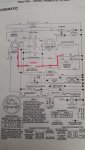
See if you 12v on A1 when key is turned ON, you need the seat switch plug in and someone or something sitting on the seat, then check if you 12v on post 85 of the relay.
you may also have a bad key switch.
Are you running this test with the engine running...?
You want it running? Getting ready to go out and check
You want it running? Getting ready to go out and check
With key on...no Volts.
Well kiss my grits, No volts with key in run position, turned to lights position and I had right volts everywhere, everything worked, brake, seat switch good, pto good. I checked that new key switch for continuity and all checked out by schematic of switch. Guess the dam New Switch is bad. Thank you guys for hanging with me I learned a lot about mower wiring. Thanks again.
bertsmobile1
Lawn Royalty
Same key switch it's just that after its started you turn it back to lights position everything works...lol. need to replace. Beats me why.
Could very well be the wrong switch.
As mentioned before, some bridge the A1 & A2 terminals internally, some don't
However if you look closely t the diagram the A1 & A2 wires are joined together further down in the wiring loom.
This brings me back to post where I suggested you make the "switch" connections on the key switch plug using jumper wires so you can eliminate the switch to determine if the problem is in the switch or in the loom.
Wiring problems are a process of elimination and jumping a switch is the best way of eliminating a switch.
More than once I have ended up jumping every switch in a loom in order to determine there was an actual fault in the wiring, which ended up being a joiner that wasn't.