ttimtucker
Active Member
I'm working on a Troy-Bilt TB4HB EC 4-cycle Blower for a friend. The full model number is 41BS4ESG766. I'm unable to get it to fire. Here is what I've done so far:
-adjusted intake and exhaust valve lash to .004" as per manual (manual says .003 to .006)
-installed new Champion RDZ4H plug gapped to .025".
-Ran leakdown test which shows about 15%; this is in the green on my gauge
-SPC-7200 Spark Check'r indicates a healthy spark (flashing green). In-line spark checker lamp also shows presence of spark. Have not run any tests to see the spark directly.
-Removed magneto and verified that it is properly aligned with the key in the shaft, so I don't have any smoking gun regarding timing.
-I've sprayed starter fluid through the carb, sprayed directly in the cylinder, squirted some gas in the cylinder (3 separate experiments) and can't get it to pop off. For each of these tests the choke and throttle are wide open.
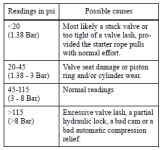
-Compression is 50 PSI; I understand this unit has compression release, so not sure how useful this value is. It does feel rather easy to pull the rope. I did squirt some oil in the cylinder which raised compression to 65 PSI. Not sure what to do with that data.
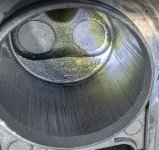
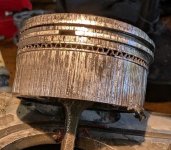
I don't have tools (like a borescope) to see cylinder walls. I'm not going to bother looking at the carb until I can get the unit to fire.
Any idea where to go from here? Thanks in advance for any advice.
-adjusted intake and exhaust valve lash to .004" as per manual (manual says .003 to .006)
-installed new Champion RDZ4H plug gapped to .025".
-Ran leakdown test which shows about 15%; this is in the green on my gauge
-SPC-7200 Spark Check'r indicates a healthy spark (flashing green). In-line spark checker lamp also shows presence of spark. Have not run any tests to see the spark directly.
-Removed magneto and verified that it is properly aligned with the key in the shaft, so I don't have any smoking gun regarding timing.
-I've sprayed starter fluid through the carb, sprayed directly in the cylinder, squirted some gas in the cylinder (3 separate experiments) and can't get it to pop off. For each of these tests the choke and throttle are wide open.
-Compression is 50 PSI; I understand this unit has compression release, so not sure how useful this value is. It does feel rather easy to pull the rope. I did squirt some oil in the cylinder which raised compression to 65 PSI. Not sure what to do with that data.
I don't have tools (like a borescope) to see cylinder walls. I'm not going to bother looking at the carb until I can get the unit to fire.
Any idea where to go from here? Thanks in advance for any advice.