
New Honda 58V Cordless Electric Lawn and Garden Tools

MowerMike

Well-Known Member
Community Leader
Joined
Sep 5, 2012
Messages
976
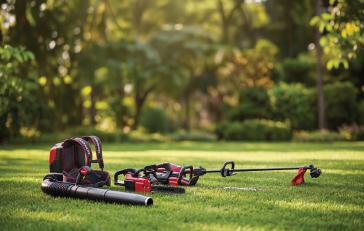
Honda is expanding their lineup of 58V cordless electric lawn and garden tools to include a string trimmer, hedge trimmer, backpack blower and chainsaw to be sold alongside their lineup of lawn mowers that were introduced in late 2025. They are advertised as being commercial duty and the release is expected in the Spring of 2027.
 
Even though battery life has greatly improved for most equipment, I wonder what the life expectancy will be on their newest offering.

They (Honda) are phasing out of all gas operated equipment from what I have gathered, and the big push is towards battery powered.

The other concern is what will be the recycle plan for this technology.
If you follow manufacturers' guidelines for battery use and recharging - usually spelled out in the owner's manual - you can get 7-10 years of life from a battery pack built with good quality cells. At that point the economics of pack replacement are very decent. A few simple guidelines that I follow:

Don't store packs in a location that will get heavily heat cycled every day - e.g., avoid garden sheds w/o temp control
Don't stack heat on top of heat:
  • Don't take a pack hot off the mower and put it straight onto the charger - let it cool first
  • Don't take a pack hot off the charger and put it straight onto the mower - let it cool first
Minimize total cumulative time sitting at full charge or very low charge:
  • Don't let packs sit around at full charge for long periods. I charge mine the night before I plan to use them, and half charge for winter storage
  • Don't let packs sit around nearly empty for long periods. If they are heavily discharged during use, let them cool off first and then bump them up to half charge if it'll be a while before your next use
  • If you find that a single use of your tool requires the pack to be very deeply discharged, consider adding another pack to split the load. Almost all packs will cut off before overdischarge/damage, so this last guideline is more of a nice-to-have suggestion
This pack management approach becomes second nature once you establish your routine - like changing the oil in your car every X miles or mowing your lawn every week.
 
  • Don't take a pack hot off the mower and put it straight onto the charger - let it cool first

Yes, this is good advice but not really necessary, since most smart chargers will sense an overly warm battery pack and not begin charging until it cools down sufficiently. The battery pack contains an RTD which communicates with the charger to let it know its temperature. The charger will automatically begin charging as soon as the temperature in the battery drops below a specified setpoint. Also, the charger will adjust the charging rate or pause charging if the battery temperature gets too high during charging. Finally, when charging is completed, chargers with fans will continue to operate the fan for a period of time to help the battery cool down.
 
Yes, this is good advice but not really necessary, since most smart chargers will sense an overly warm battery pack and not begin charging until it cools down sufficiently. The battery pack contains an RTD which communicates with the charger to let it know its temperature. The charger will automatically begin charging as soon as the temperature in the battery drops below a specified setpoint. Also, the charger will adjust the charging rate or pause charging if the battery temperature gets too high during charging. Finally, when charging is completed, chargers with fans will continue to operate the fan for a period of time to help the battery cool down.
I'm aware of that, but in cases like this there's almost always a compromise between engineering and product management. The engineers will want the pack to cool all the way down to ambient before allowing charging to commence, and the product manager will want the limit to be less conservative to satisfy customers not wanting to wait too long. The final set point is usually somewhere in between. I'm not saying you will damage the pack by relying on the internal temperature control; you won't. Just that you can apply an extra measure of conservatism if you choose.

BTW, I have the rapid charger, which has an internal fan and does exactly what you state. The standard charger included with the mower has no internal fan.
 
If you follow manufacturers' guidelines for battery use and recharging - usually spelled out in the owner's manual - you can get 7-10 years of life from a battery pack built with good quality cells. At that point the economics of pack replacement are very decent. A few simple guidelines that I follow:

Don't store packs in a location that will get heavily heat cycled every day - e.g., avoid garden sheds w/o temp control
Don't stack heat on top of heat:
  • Don't take a pack hot off the mower and put it straight onto the charger - let it cool first
  • Don't take a pack hot off the charger and put it straight onto the mower - let it cool first
Minimize total cumulative time sitting at full charge or very low charge:
  • Don't let packs sit around at full charge for long periods. I charge mine the night before I plan to use them, and half charge for winter storage
  • Don't let packs sit around nearly empty for long periods. If they are heavily discharged during use, let them cool off first and then bump them up to half charge if it'll be a while before your next use
  • If you find that a single use of your tool requires the pack to be very deeply discharged, consider adding another pack to split the load. Almost all packs will cut off before overdischarge/damage, so this last guideline is more of a nice-to-have suggestion
This pack management approach becomes second nature once you establish your routine - like changing the oil in your car every X miles or mowing your lawn every week.
The economics of battery pack replacement are NOT good. After 7-10 years sometimes the manufacturer changes the entire design so that the new battery will not even fit (without slight modifications). The cost of batteries is often 2/3 of cost of tool or equipment. Unless you buy knockoff batteries. Factor in inflation, buying a new battery for a decade old piece of equipment, and what to do that is environmentally friendly with the old battery pack, and you have some real life concerns. How many people are going to spend hundreds on a new battery pack for older equipment? Many will opt for new equipment, thus leading to more crap in the landfill.
 
If you follow manufacturers' guidelines for battery use and recharging - usually spelled out in the owner's manual - you can get 7-10 years of life from a battery pack built with good quality cells. At that point the economics of pack replacement are very decent. A few simple guidelines that I follow:

Don't store packs in a location that will get heavily heat cycled every day - e.g., avoid garden sheds w/o temp control
Don't stack heat on top of heat:
  • Don't take a pack hot off the mower and put it straight onto the charger - let it cool first
  • Don't take a pack hot off the charger and put it straight onto the mower - let it cool first
Minimize total cumulative time sitting at full charge or very low charge:
  • Don't let packs sit around at full charge for long periods. I charge mine the night before I plan to use them, and half charge for winter storage
  • Don't let packs sit around nearly empty for long periods. If they are heavily discharged during use, let them cool off first and then bump them up to half charge if it'll be a while before your next use
  • If you find that a single use of your tool requires the pack to be very deeply discharged, consider adding another pack to split the load. Almost all packs will cut off before overdischarge/damage, so this last guideline is more of a nice-to-have suggestion
This pack management approach becomes second nature once you establish your routine - like changing the oil in your car every X miles or mowing your lawn every week.
Geez! Is this supposed to be an improvement over ICE equipment? So I'd need to bring my batteries into my house while not using them, and then charge them at a particular time... inside (where experts say NOT to keep batteries), then carry them back to my workshop for use? This is WAY more work than I do for my gas engines. They stay in an unheated workshop, and when I need to use one, I check and top off fluids, start it up, and use it. And I don't have the let the engine cool before refueling. Or let the fuel cool after refueling. A 7-10yr lifecycle IS a big improvement over previous batteries, but I'm still going to stick with gas for a while. I have 2 riding mowers, 2 push, a log splitter, and 5 2-cycle tools. Excluding my 1 yr old log splitter, my newest engine is 11yrs old, and they all run like new. I DO have battery powered tools, including a chainsaw, but battery power is not quite there for me for most of my needs. As TSE mentioned, the economics aren't there yet. And according to the above regimen, the promise of ease of use is false, too. I admit, gas isn't perfect either. During the last off-season, I had to rebuild the Kohler on my main mower, due to, I think, neglect from the previous owner. But this highlights another issue... parts availability. I was able to get parts for a 10 yr old (at the time) engine. I WILL say that I think gas engines are more sensitive to neglect. If neglected, they will fail more quickly than neglected battery powered tools.
 
Back
Top