how to set torque wrench?

steves snapper

Active Member


how to set torque wrench?
I have been given a harbor freight inexpensive torque wrench that I'm unsure of how to set the LBs.
I think I have it set right now at 35LBs
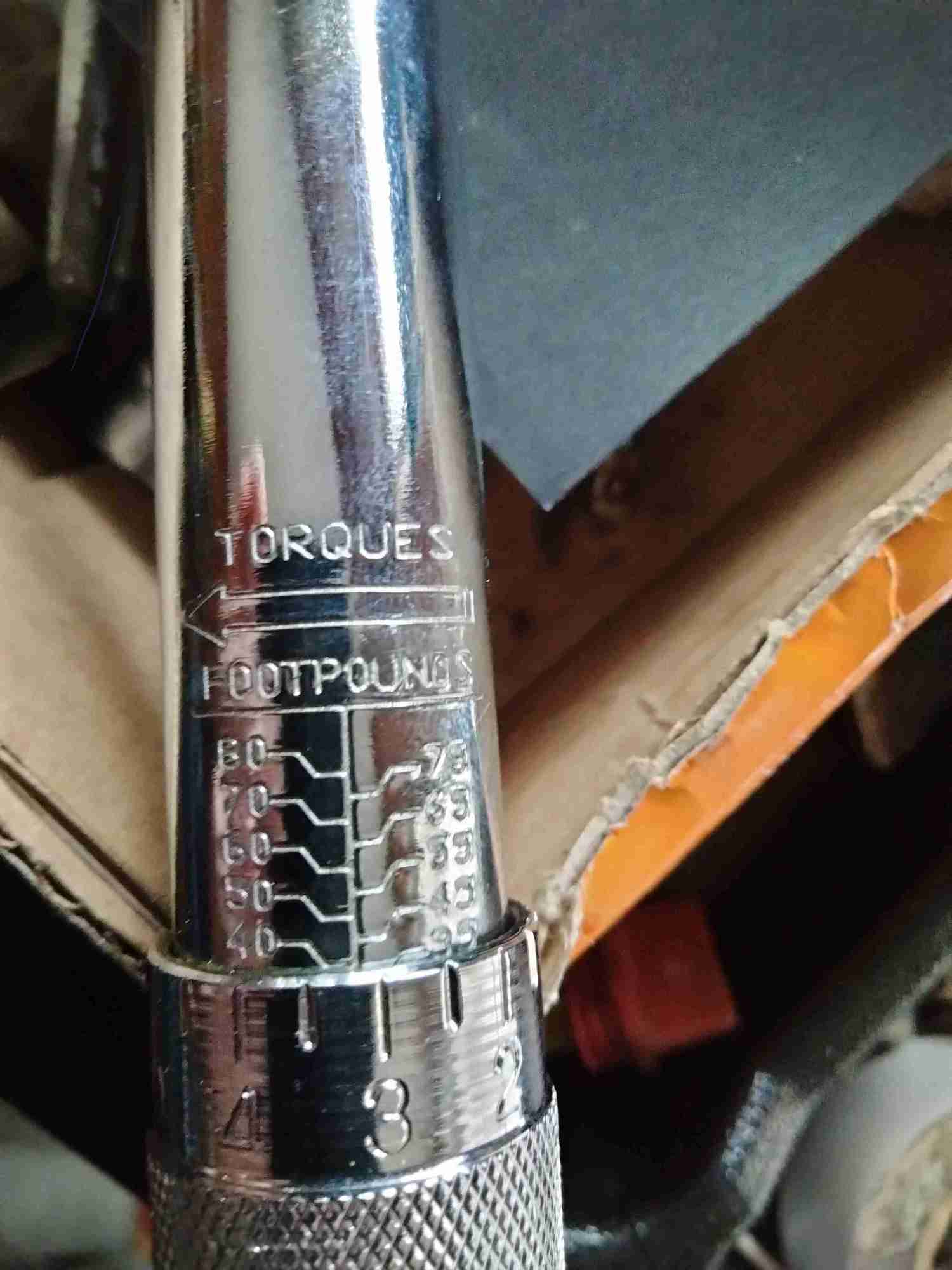
torqure_wrench_set_to_40lbscompressed_090edce71b251e020a29c075153ddb1c77d56bf9.jpg

unsure of what the 0,1,2,3,&4 on the adjuster handle is?could this be like a multiplier of what I have it set to.
like if the 3 is a mulipilr then 3X35 is 105LBs correct I'm doubting this bc this thing is like 18" long don't see it ever tightening any nut down near 105LBs.
my previous torque wrench (lent an never returned) a craftsman was much more self explainitory.

I would like to know how to use this torqure wrench, of course I wouldn't trust a harbor freight for like torqureing down the cars heads this job is for the snapper lawn mowers blown head gasket.please advise and thanks
 
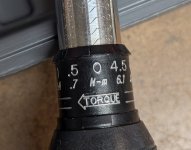
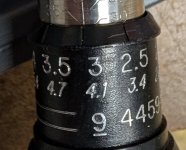
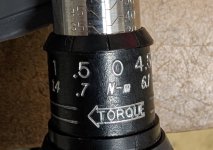
How many numbers are on the handle? 1, 2, 3, 4, 5, 6, 7, 8, 9, then 0 again, or 1, 2, 3, 4, then 0 again? If you put the 0 on 30, that would be 30 ft lbs. When you turn it 3 past 30 it will read 33 ft lbs. At 0 again and it should be 35 ft lbs. If you have a 0 - 9 ring, then the way it looks changes but the principle is the same. To be frank, from the photo angle, it looks goofy, like it has more than 5 major lines, maybe not. Below are examples from a torque wrench with a 0 - 4 ring on it. The ring on the one below has both FT LBS and NM on it. The master NM is on the opposite side of the wrench.

30 ft lbs
30.jpg


33 ft lbs
33.jpg


35 ft lbs
35.jpg
 
Last edited:
Those # are you add to previous inscribe number that you just passed. So 30 + 3 is 33.

Just note I had to quit buying these HFT units as they either didn't line up correctly or was way out spec. The last 3/8 one was out by 20 ft-lbs otherwords the 50 ft/lbs was 70 ft/lbs. It also was mis-aligned.

You must check it against a known accurate one.
 
I send mine to TeamTorque for cleaning and calibration. Very reasonable priced. They get it very close and send a calibration sheet so one knows that say 100 is really 98 or 103 etc.. Also, on a used clicker wrench, sometimes they are being discarded because they stopped clicking accurately. The grease inside hardens and causes that. If it feels wrong, stop and test it on a bolt in a vise or something where it is not a real problem if it breaks or strips a bolt. One way of testing a wrench is to hang a known weight at a known distance from the center of the ratchet, and multiply. 10 lbs at 18 inches would be 10 x 1.5' so 15 ft lbs. 20 lbs would be 20 x 18 inches would be 20 x 1.5 = 30 ft lbs. If the handle was 20 inches long where the weight was tied it would be 20" \ 12" per foot or 1.66 ft. Then the calculation would be 20 lbs x 1.66 ft = 33.2 ft lbs.
 
Last edited:
How many numbers are on the handle? 1, 2, 3, 4, 5, 6, 7, 8, 9, then 0 again, or 1, 2, 3, 4, then 0 again? If you put the 0 on 30, that would be 30 ft lbs. When you turn it 3 past 30 it will read 33 ft lbs. At 0 again and it should be 35 ft lbs. If you have a 0 - 9 ring, then the way it looks changes but the principle is the same. To be frank, from the photo angle, it looks goofy, like it has more than 5 major lines, maybe not. Below are examples from a torque wrench with a 0 - 4 ring on it. The ring on the one below has both FT LBS and NM on it. The master NM is on the opposite side of the wrench.

30 ft lbs
View attachment 72699


33 ft lbs
View attachment 72700


35 ft lbs
View attachment 72701
yes one side has foot LBs opposite side has neuton meters.

yes the #s on dial are 0,1,2,3 &4. so in my image I've got it set to 38LBs.
what is the button on the end of wrench maybe a lock? thanks sgkent
 
I send mine to TeamTorque for cleaning and calibration. Very reasonable priced. They get it very close and send a calibration sheet so one knows that say 100 is really 98 or 103 etc.. Also, on a used clicker wrench, sometimes they are being discarded because they stopped clicking accurately. The grease inside hardens and causes that. If it feels wrong, stop and test it on a bolt in a vise or something where it is not a real problem if it breaks or strips a bolt. One way of testing a wrench is to hang a known weight at a known distance from the center of the ratchet, and multiply. 10 lbs at 18 inches would be 10 x 1.5' so 15 ft lbs.
ok thanks
 
Those # are you add to previous inscribe number that you just passed. So 30 + 3 is 33.

Just note I had to quit buying these HFT units as they either didn't line up correctly or was way out spec. The last 3/8 one was out by 20 ft-lbs otherwords the 50 ft/lbs was 70 ft/lbs. It also was mis-aligned.

You must check it against a known accurate one.
OK thanks star tech I understand how to operate it. it's basiecley brand new still I don't trust harbor frieght mite just use as a rachect.
 
I can see 38 from that since it is just shy of 40. The nut and screw on the end of many of the wrenches is for calibration. Leave it alone unless you have a means of calibrating it. Treat it as a precision instrument and be careful with it. They aren't meant to be used as a common ratchet or breaker bar. Store on the lowest number and in its case.
 
And they should be stored unloaded always.
absolutely. The guy at Torque Channel did some tests for up to a year on torque wrenches - leaving them wound up or not. The ones that were left wound up drifted significantly in accuracy over time. Even left wound up for a period as small as a month caused them to deviate. The higher they were set to, the more they drifted also.
 
Back
Top