
You are using an out of date browser. It may not display this or other websites correctly.
You should upgrade or use an alternative browser.
You should upgrade or use an alternative browser.
Charging Problem
- Thread starter john.mac
- Start date

So you knowing this tid bit, take a DC amp clamp around the red wire to the fuel pump solenoid what ever this is supposed to be. Measure the amp draw at a min 30 and 2 minutes in. Any drastic increases will show you the way.Do you know if the fuel solenoid is a time delay…like two minutes….
That’s how long it takes to blow the fuse…just running at idle. Deck is NOT engaged.
Or does it take 2 minutes for "something" to get hot, increasing the amp draw finally popping the fuse?
Make sure the fuse, guessing it is a maxi type fuse here, has drag marks on each fuse leg. As in scratches showing you a good connection between the fuse legs and the fuse holder.
If the fuse easily drops into the fuse holder, THAT is a problem. Poor connection heating up drawing excessive amperage.
You might consider using some fuse type breakers instead of constantly replacing fuses.
They are reasonable priced. I keep some around for such use.
Also get some fuse holders for the breakers and You can fuse down in the branch circuits.
For example use a 20-25 amp as the main fuse but go with a lesser amp fuse (5 or 10) in the branch circuits. When the lesser amp fuse breaker lets go first you know that is the circuit that has the Overload. (think about how the fuse box is on a auto or the breaker box to your house. Fuse the individual circuits until you get it isolated.
You say it lets go without the electric PTO en-gauged so not many branch circuits involved.
They are reasonable priced. I keep some around for such use.
Also get some fuse holders for the breakers and You can fuse down in the branch circuits.
For example use a 20-25 amp as the main fuse but go with a lesser amp fuse (5 or 10) in the branch circuits. When the lesser amp fuse breaker lets go first you know that is the circuit that has the Overload. (think about how the fuse box is on a auto or the breaker box to your house. Fuse the individual circuits until you get it isolated.
You say it lets go without the electric PTO en-gauged so not many branch circuits involved.
Something popping a 20 amp fuse is big. Some wire probably inside a connector has a bad connection. Takes 2 minutes to get hot cranking up the resistance in said charging circuit smashing the fuse.
What are we talking about here? Charging coil, regulator, wire and connectors? Is the regulator grounded or not? Separate ground wire for it? If so is the ground CLEAN and to the engine block?
What are we talking about here? Charging coil, regulator, wire and connectors? Is the regulator grounded or not? Separate ground wire for it? If so is the ground CLEAN and to the engine block?
I rechecked all the wiring and found nothing. I do not have a fuel solenoid. The pink wire in the above schematic is capped off in the harness.
I decide to try to get to the stator. I had to pull the engine off the mower just to pull the front drive shaft off. At least working on the engine while it’s on a bench is much easier.
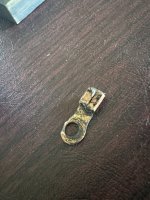
Anywho, got the stator bolts off and found this lug behind it…. I think this was shorting the stator out. I see marks on the stator wire and a black spot on the engine heat shield….
It doesn’t explain two minutes but this seems like a promising culprit.
I decide to try to get to the stator. I had to pull the engine off the mower just to pull the front drive shaft off. At least working on the engine while it’s on a bench is much easier.
Anywho, got the stator bolts off and found this lug behind it…. I think this was shorting the stator out. I see marks on the stator wire and a black spot on the engine heat shield….
It doesn’t explain two minutes but this seems like a promising culprit.
Attachments
I rechecked all the wiring and found nothing. I do not have a fuel solenoid. The pink wire in the above schematic is capped off in the harness.
I decide to try to get to the stator. I had to pull the engine off the mower just to pull the front drive shaft off. At least working on the engine while it’s on a bench is much easier.
Anywho, got the stator bolts off and found this lug behind it…. I think this was shorting the stator out. I see marks on the stator wire and a black spot on the engine heat shield….
It doesn’t explain two minutes but this seems like a promising culprit.
Attachments
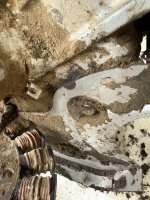
Looks like some kids have been mud bogging with it. Man she is dirty. All that dirt holding water rusting and shorting parts out. I see it too.
Clean it like a new engine block. Scrub brushes and degreaser. Backpack blower or shop air after she is all clean.
All that mud and grit encapsulates parts holding heat it burning things up.
These are AIR COOLED ENGINES. Meaning the cleaning is not just for looks.
Clean it like a new engine block. Scrub brushes and degreaser. Backpack blower or shop air after she is all clean.
All that mud and grit encapsulates parts holding heat it burning things up.
These are AIR COOLED ENGINES. Meaning the cleaning is not just for looks.