Carb Cleaning Question

Bob372

Member
I've got a stupid question on cleaning a carburetor in an ultrasonic cleaner. I'm considering getting one and was wondering...

I've seen dozens of videos where they just drop it in, but aren't there a lot of air pockets in there? I always think to myself that they should spin it around after they submerge it to get the air out. Does the ultrasonic action negate the need?

Thanks.
 
Simple answer, YES. Should add, google search “HOW DOES AN ULTRASONIC CLEANER WORK “. It should answer your questions.
 
Last edited:
I've got a stupid question on cleaning a carburetor in an ultrasonic cleaner. I'm considering getting one and was wondering...

I've seen dozens of videos where they just drop it in, but aren't there a lot of air pockets in there? I always think to myself that they should spin it around after they submerge it to get the air out. Does the ultrasonic action negate the need?

Thanks.
I equate them like a pressure washer car wash compared to a real hand wash on a car or truck. No comparison to a hand wash far as cleanliness goes. Ultras are not simple drop in devices and all is perfectly clean at least for carburetors. Too many tiny internal passages and such with no physical cleaning going on.

Simple garage sell hot plate, pot and Pine Sol is much cheaper and does a better job IMO. Buy what you like.
 
I've got a stupid question on cleaning a carburetor in an ultrasonic cleaner. I'm considering getting one and was wondering...

I've seen dozens of videos where they just drop it in, but aren't there a lot of air pockets in there? I always think to myself that they should spin it around after they submerge it to get the air out. Does the ultrasonic action negate the need?

Thanks.

I turn the carb different after about 30 min's run times plus

What I do.

Main reason I got a US is I prefer the OEM carbs instead of the China clones and I clean/re-build some carbs that are NLA or expensive if found.

If a heated type US, after the water gets warm drop the carb in following the US instructions, then after about 30 min's, use low pressure air across the carb (not directly injected into the jets/orfices then back into the US and then back to low air again and then maybe have the carb turned different so as different air pockets are exposed. I no longer use heat on small chainsaw carbs due to possibly ruining OLD internal non serviceable check valves. You can use the pressure type canned carb for injection if desired instead of air nozzle. If doing lots of carbs a good set of hollow ground gunsmith screwdriver kits is really handy. allows you to select correct size blade for removing brass jets/orfice tubes that are buried deep inside some carbs. If you find one stuck just leave it for the first cleaning and try the carb. It may not need to be removed. (see such quite often on old walbro carbs)

If the carb is really cruddy on the outside clean off all the external crud first.
On small carbs I sometimes just throw the whole carb in a warm US BEFORE attempting to take it apart. This pre heating and cleaning sometimes aids in getting a carb apart.

I started out with a small US and then got a larger one that holds about 2 gal so I can do the large 4 barrel auto carbs. Just get the water warm vs hot.
I prefer the manual adjustable heat and run times vs the electronic type US.
(costs about $150- $200 on Amazon

Like the guy mentions a heated bowl will get some going.
Instead of using the high dollar cleaners I just use dash of dawn dish soap and water or de-greasers and water or for really bad internals I use 50/50 mix of white vinegar and water.
Clean the carb with baking soda and water to stop the vinegar acid reacdtion to the aluminum/pot metal after removing the carb.

 
I have friends who are gunsmiths, and they bag parts going into the ultrasonic cleaner, so only the solution in the bag gets dirty, so they are throwing away less degreaser. I've got big ziplocks, is it worth doing with small engine carbs?
 
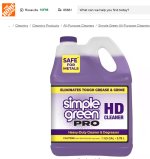
set it into the fluid in a way that the air can get out. Use "Simple Green Pro HD SAFE FOR METALS" with hot water and you will get metal safe results. I spent considerable time finding something that is 100% safe 100% of the time for aluminum and carb metal. Everything else has potential to cause discoloration to the surface of the metal.

hd.jpg
 
I also use simple green.
I've put small parts inside a glass container with a cleaning solution and then set it down in the big solution tank. You can even use a different cleaning solution inside the glass container if desired using this method.
This keeps all the crud in the smaller glass container.

I mentioned using 50/50 mix of vinegar and water. I use this on the really cruddy carbs, but it will discolor some aluminum and magnesium and if not neutralized (cleaned with a baking powder mix in a external container the aluminum/magnesium/pot metal will feel oily and on some the vinegar will keep re-acting and turning the carb body a dull gray but it also cleans the small orffices really good. I've seen rust particles and other small crud just start lifting and turning loose from the carb body as the US works.
On some of the small carbs I've used the US to re-make a pump diaphragm flexible by using the jar method and ATF fluid then re-install the diaphragm and not need a kit, so as to test the equipment.


Lots of info on-line about such now days also.
 
Back
Top