31F707 0112 E1

PTmowerMech

Lawn Addict
It spits out a puff of smoke on start up. Runs fine with almost no smoking when it's running. But when I kill it, another bigger puff of smoke comes out. I know it's got a bad head gasket. I can see quite a bit coming out the fill tube after running it for a few minutes.

My question is, is the head gasket causing the puff of smokes? Or could it be something else. I'm getting good compression. 120lb or so.
The ole plug, before i pulled the head was coated thick with black burnt oil.

Just waiting on the new head gasket. But wanted to check to see if the smoke puffs could be something more severe (like bad rings) before I went to far with this engine.
 
Somewhere on that engine should be a crankcase breather tube to the air cleaner. Take it off and see if there's blowby. If there's some serious smoke the rings are probably shot, or the cylinder is messed up.
 
Somewhere on that engine should be a crankcase breather tube to the air cleaner. Take it off and see if there's blowby. If there's some serious smoke the rings are probably shot, or the cylinder is messed up.

Yes, I forgot to mention a lot of smoke coming from there.

How do you check the ring gap?
 
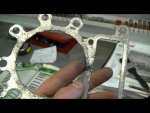
That is from the blown head gasket. They blow out normally in the thin strip of gasket that sends compression down the pushrod gallery to the crankcase.

blow.jpg
 
That is from the blown head gasket. They blow out normally in the thin strip of gasket that sends compression down the pushrod gallery to the crankcase.

View attachment 45660

Yup, that's about what mine looked like. Had two smaller gouges in it, right there in the same spot.

That's how the pressure in the engine gets built up and comes out of the PCV.

You folks are geniuses.
 
How do you check the ring gap?

Remove the rings from the piston(s). Then invert the piston and use it to push each ring down in the cylinder bore. Check the gap with a feeler gage. Do this at top and bottom of the ring's travel to check the cylinder for taper.
 
Remove the rings from the piston(s). Then invert the piston and use it to push each ring down in the cylinder bore. Check the gap with a feeler gage. Do this at top and bottom of the ring's travel to check the cylinder for taper.

Ah, rats. Was hoping a there was a way to see the rings without having to pull them. At least the top one.
 
Back
Top