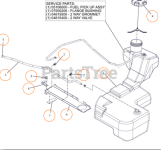
Gravely HD 44 leaking fuel tank

Blade_Runner

Forum Newbie
Hello, my 44hd fuel tank is leaking. I tried using blue magic quick steel plastic tank repair and it worked for a for a couple of weeks. I know the tank is hdpe polyethylene but not sure what to try next. Certainly do not want to spend 700 on a new tank.

Thanks for the help!
 
well, there are plastic welding kits and a lot of how to's on youtube. Some industries weld the pipe together all the time and it holds against a lot of pressure. Also mower bone yards might have a good one. Without a model and serial, which tank, left or right etc., if multiple tanks, no one really is going to be able to give a definitive answer for your specific situation. I looked online and some of their tanks are only $150. Basically a steak meal for a family during the last three or four years. If you weld it, I might drill the ends of the crack, weld the crack with some filler rod, and then find a sheet to put over it and weld the edges to the tank. That should slow it for a few years. - unless it is a stress crack in a mount or something like that in which case it will fail again pretty quick.

 
Where is it leaking at?
1771419671535.png
The tank itself is HDPE Plastic and only plastic welding will work if it is anywhere other the fuel and vapor lines fittings. Several years I find one product that could bond to HDPE plastic but it was $300 per ounce back then. If you need plastic welding then I would suggest finding someone with experience as improper welding just makes things worst.
 
HDPE plastic is slick. Keep this in mind. Most glues and such will not stick long term. They make a special epoxy for these clear plastics. I would pass on all of them. See below.

Plastic welding is the best way. Really easy if you can solder or weld. Kind of like spreading frosting on a cake. You can get a plastic welding iron for cheap. Has stainless mesh screen and filler rods in the kit.

 
Last edited:
The reason vitality nothing bonds to HDPE is because it is extremely chemically resistance. This why things like Super Glue uses it.

As I asked before anyone so stuck on plastic welding is if it is the grommets that are the leaking source.

As plastic welding a few key things is full penetration and using the correct plastic filler rods. Surface welding is just temporary patch. Use no more heat than required as overheating drys out and makes the plastic brittle.

Also note some fuel tanks appears to be a combo of HDPE and rubber especially the black ones.
 
it was his first post and he is not back since. Maybe he will drop in.

On things like this, I look at the cost of a replacement part something to annualize. Meaning that if every three years I have to buy a certain expensive part, then divide by the three seasons and see if it is worth keeping the device.

Let's say the tank is $700 as the OP stated, and I question that, and the device is 8 years old, then that is about $90 a season to run it. If it is used 25 times in a season, then the cost is only about $3.50 a use. But if instead it was three years old and I used it twice a season, then keeping the device is prohibitive at $120 a use. Ownership of anything is not free. Even the watch in the dresser drawer that rarely gets worn still needs a battery replaced once in awhile.
 
I've plastic welded several tanks. (but I'm also good at soldering due to a electronics background)
Get the tank out and clean the interior good so as to not have a explosion hazard. Fill with water and rinse several times.
Best to try to use/remove a piece of the same plastic material from the tank that you are welding/repairing.. Use of the wrong type plastic will not get a long lasting fix.
After doing the repair just use very low pressure air into the tank, 1-2 psi even just blowing into the tank and soap, like looking for a tire leak.. Too much air pressure can cause additional leaks

If it's actually a $700 tank and you do not have any experience find a plastic welder person.
First you need to figure out why it's leaking, not mounted properly, something rubbing on the tank, gas cap not venting properly and pressure buildup, old age and brittle tank.
I've had to install rubber padding on some tanks to keep them from leaking after they are repaired.
.
 
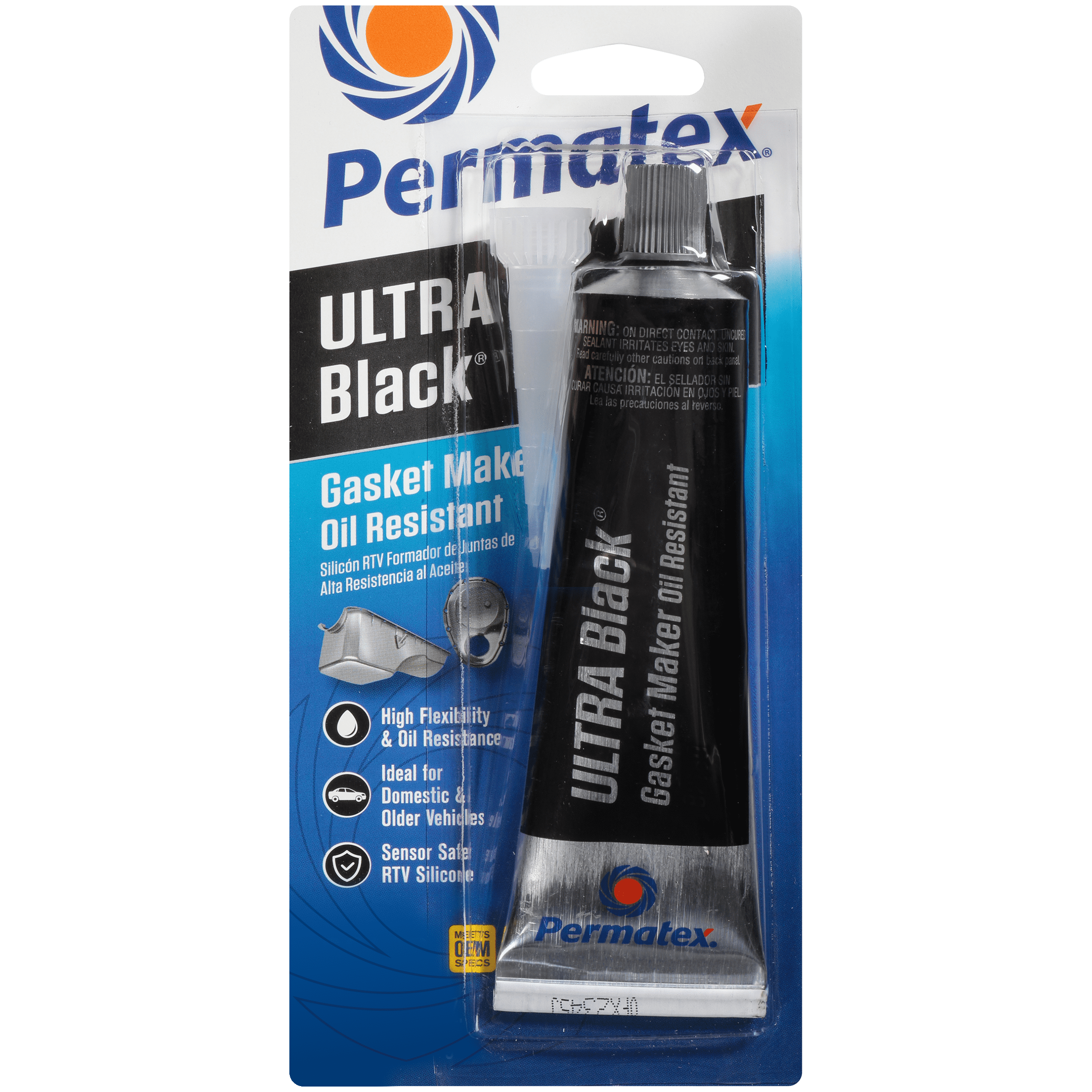
Try wiping down with alcohol and then applying MULTIPLE layers getting larger and larger in diameter of black RTV.
Let each layer thoroughly dry before next one.
If concerned too slick, rough up with some 80 grit sandpaper to give RTV more adhesion.
Done this on a Stihl blower and a weed eater and both not leaking in years!
You only lose $8 if it doesn't work?
 
Some of my clients are plastic item manufacturers. I learned that the reason HDPE is used for so many blow molded & injection items is that no mold release is needed & no cleanup is needed. This cuts costs. Unfortunately, this non-stick feature is also the reason that no adhesive will work with HDPE.

An idea is to check Surplus Center. https://surpluscenter.com/search.php?search_query=fuel+tank
They sell many different fuel tanks for very reasonable cost. Perhaps they have one that you can use, keeping in mind that you might have to make a bracket to mount it. Or, you may find two smaller ones for easier mounting and parallel or series plumb them.

If you don't mind if things go very wrong and do more damage, you can try plastic welding by putting a rod of HDPE in a Dremel type tool. They spin fast enough to melt the rod and base material. I've done it a bunch of times with various plastics. HDPE is successful. Nylon? Not so much successful.
But, like Forest2 wrote: Make SURE there is no explosion hazard. Rinse, Rinse, Rinse with water first. Maybe pack it with sand for extra safety.

Next Idea;
On the market are fuel tank liner kits. KBS makes one. It is a urethane liquid that one pours into a prepped tank to seal leaks. Whether or not it is compatible with plastic tanks is a question to ask KBS. https://www.kbs-coatings.com/kbs-tank-sealer-system

Paul
 
Back
Top