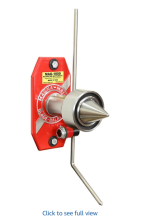
Do I actually need a blade balance?

Thanks for all the input; definitely learned a ton. Gonna pull the trigger on the magnetic wall mount balancer since its cheap enough to justify. Figure worst case I got a new garage toy, best case my spindles last longer. Thanks again!
All good!

Some perhaps obvious points when balancing:
  • Clean the blade thoroughly.
  • Use sharpening the first 10-30 mm from tip (less is best) as the reduction in weight, on the heavy end.
  • When sharpening, go for a 45 or more blunt degree edge, as this will last longer than something less.
  • If the blade is near balanced, use judgement to decide if its worth trying to make perfect (remeber, in work, it will wear/chip & collect material quit quickly ie change the balance.)
  • Vibration is not always balance related, it could be a bearing on the way out, check for movement
Good Luck! :devilish:
 
All good!

Some perhaps obvious points when balancing:
  • Clean the blade thoroughly.
  • Use sharpening the first 10-30 mm from tip (less is best) as the reduction in weight, on the heavy end.
  • When sharpening, go for a 45 or more blunt degree edge, as this will last longer than something less.
  • If the blade is near balanced, use judgement to decide if its worth trying to make perfect (remeber, in work, it will wear/chip & collect material quit quickly ie change the balance.)
  • Vibration is not always balance related, it could be a bearing on the way out, check for movement
Good Luck! :devilish:
I sharpen blades nice and sharp. They only get dull from there, so why not sharpen them nice and sharp? I realize the blade is more susceptible to nicks, etc. the sharper they are. I do not balance blades.
 
The next step is dynamic balancing, which takes into account the rotational forced acting on the system. If your dynamic balance is out, no amount of static balancing will fix it. :devilish:
Where would you find a shop that does this? Most shops use the cheap cone balancers. You're lucky if you find one that uses an Oregon-type magnetic balancer. I don't know of any dynamic balancers for sale anywhere. This is a great concept, but not practical in practice.
 
Where would you find a shop that does this? Most shops use the cheap cone balancers. You're lucky if you find one that uses an Oregon-type magnetic balancer. I don't know of any dynamic balancers for sale anywhere. This is a great concept, but not practical in practice.
This is the one that I use. Purchased it at auction from a retired mower shops estate sale about 25 years ago

1785289991351.png
 
I am not suggesting you try for a Dynamic blade balance, likly completely impractical.

I only mentioned Dynamic balancing, to illustrate that in a mower, being obsessive about Static blade balancing, is likly to be a wast of time, due to all the other rotating factors that impact on how much vibration there will be ie close enough is good enough for a mower blade.

Dont get me wrong - I agree with Static balancing the blades every time you do anything that may change the balance (including damaged blade "sharpening"). The reduced vibration will be less fatiguing for the operator and reduce wear on bearings and fatigue cracking of the deck.

Blade Tracking is as important as balancing. Tracking is when each tip, when rotated, follows the same path (true). A warped blade, bent spindle, damaged spindle housing or cutter - deck can, cause the blade not to Track true. This will not only deliver an uneven cut, it may present as vibration, even with a Static balanced blade.

 
I am not suggesting you try for a Dynamic blade balance, likly completely impractical.

I only mentioned Dynamic balancing, to illustrate that in a mower, being obsessive about Static blade balancing, is likly to be a wast of time, due to all the other rotating factors that impact on how much vibration there will be ie close enough is good enough for a mower blade.

Dont get me wrong - I agree with Static balancing the blades every time you do anything that may change the balance (including damaged blade "sharpening"). The reduced vibration will be less fatiguing for the operator and reduce wear on bearings and fatigue cracking of the deck.

Blade Tracking is as important as balancing. Tracking is when each tip, when rotated, follows the same path (true). A warped blade, bent spindle, damaged spindle housing or cutter - deck can, cause the blade not to Track true. This will not only deliver an uneven cut, it may present as vibration, even with a Static balanced blade.
I don't disagree that dynamic balancing is the Holy Grail of balancing. However, at 3600 RPMs, I've found that my Oregon magnetic balancer is better than a cheap cone balancer, and makes a difference. I had a blade on a push mower that was causing vibrations, even after balancing with a cone balancer. Once I balanced it with my Oregon balancer, the vibrations went away. So in this case, a push mower running 3600 RPMs, good static balancing was good enough.
 
This is good enough. A large nail in a stud or tree works well. Balance is not as critical on a mower with multiple blades. However, balance is more important on single blade walk behind mowers.
 

Attachments

  • Screenshot_20260729-213119.png
    Screenshot_20260729-213119.png
    750.6 KB · Views: 2
Back
Top